The July releases extend beyond one-shot generation
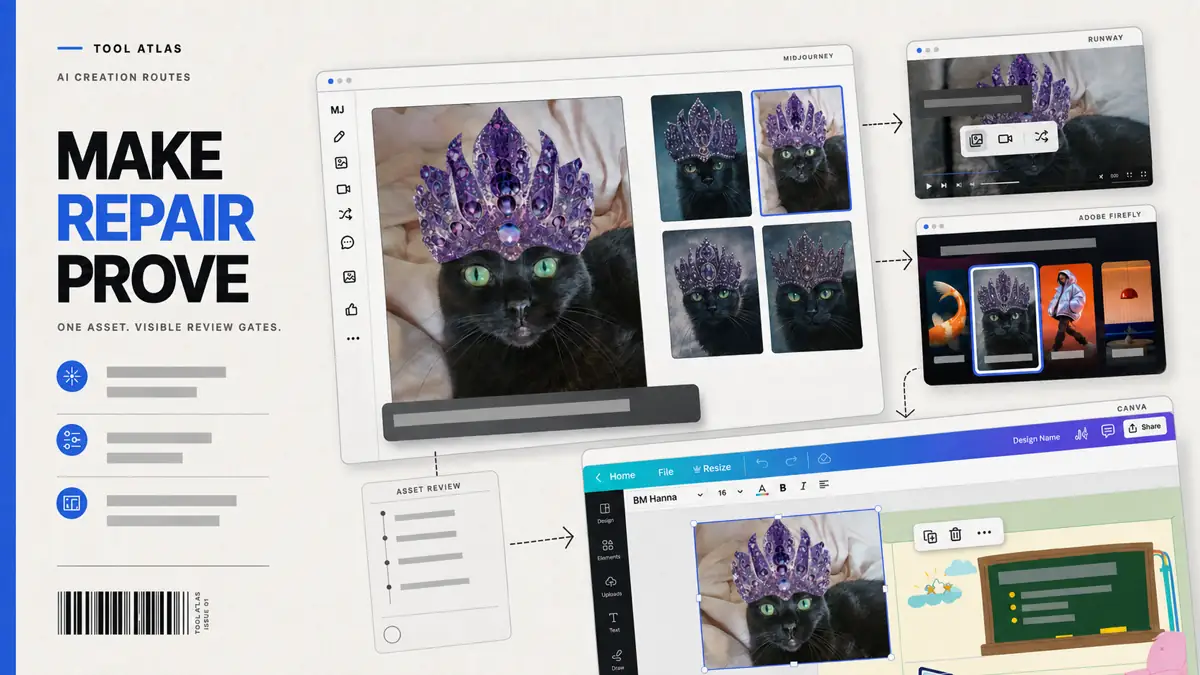
Three dated releases stand out in the official records we could verify. Midjourney launched Version 8.2 on July 24. Runway added Nano Banana 2 Lite for paid plans on July 1 and introduced Agent Skills for all plans on July 2. The releases came from different products, yet they point in the same direction: creative tools want to own more of the route from taste and prompting to campaigns and finished assets.2, 12
Midjourney described V8.2 as an image-model update focused on aesthetics, image quality, and personalization. The company said random low-quality results should fall and encouraged users to test both old and new personalization profiles. Those are testable vendor claims, not a universal verdict on image quality. A creator with a trained profile may see a different change from a team producing tightly specified product scenes.2, 1
Runway's July entries were less about a single flagship video model. Nano Banana 2 Lite expanded the models available inside Runway, while Agent Skills promised command-driven jobs such as building an ad campaign, creating a commercial, and localizing ads. The product is presenting itself as a creative operating surface that can coordinate several steps, formats, and models.12, 11
Canva and Adobe also offer broad AI creation surfaces, but their current product pages do not establish a July release date by themselves. Canva's newsroom was not accessible through the research route used for this review, and a current feature or pricing page can show what exists now without proving when it arrived. We include those products in the workflow comparison and leave unsupported July chronology out.4, 6, 7
What the chronology does and does not prove
The dated record supports three narrow statements: Midjourney released V8.2 on July 24; Runway listed Nano Banana 2 Lite on July 1; Runway listed Agent Skills on July 2. It does not support the claim that July produced the best image model, that every user received the same improvement, or that Canva and Firefly stood still. Product pages are current-state evidence unless they carry a trustworthy release date.2, 12, 4, 7
That restraint matters in an update article. A loose chronology can make an ordinary feature look new and turn a vendor's quality claim into an editorial verdict. The useful job is to identify what changed, connect it to a production decision, and say what must still be tested. Release notes provide the starting line, not the conclusion.2, 12
| Date | Product | Confirmed release | What a production team should test |
|---|---|---|---|
| July 1 | Runway | Nano Banana 2 Lite on paid plans | Image speed, adherence, editability, plan access, and cost in the full route |
| July 2 | Runway | Agent Skills on all plans | Whether campaign and localization outputs remain controllable across steps |
| July 24 | Midjourney | Version 8.2 image model | Aesthetics, failure rate, prompt adherence, and old versus new personalization profiles |
Model quality now depends on the surrounding workflow
A creator once compared tools by asking each one for a hero image. That test misses the work around the image: collecting references, preserving a character, changing one object, resizing for channels, producing motion, clearing rights, and handing an editable file to another person. The winning first output can still create the worst production route.7, 12, 1
Midjourney's personalization focus raises a practical question about portability. A profile built from ratings may improve taste alignment inside Midjourney, but the team needs a way to describe and reproduce the direction when another person, model, or vendor takes over. Keep the brief, references, selected outputs, prompt settings, and edit decisions outside the profile itself.2, 3
Runway's Agent Skills raise a different ownership question. If one command produces copy, images, video, and localized variants, reviewers need to see which source and model produced each asset, what the agent changed, and where to intervene. Speed has value when the route stays inspectable. A finished campaign that cannot be corrected at the scene or claim level leaves the team with an expensive rerun.12, 13
Adobe Firefly now presents Adobe models and partner models for image, video, and audio work in one interface. Adobe's generative-credit documentation says partner models count as premium features and can consume different amounts of credit. The interface may feel like one tool while cost, terms, and output behavior still vary by model.7, 9, 8
Canva's value remains close to layout, brand assets, collaboration, and channel output. That can beat a stronger standalone generator when the team needs a marketer to turn an approved idea into ten on-brand formats. The comparison should measure the whole handoff, not crown one model across unrelated work.6, 5
One campaign brief reveals four different products
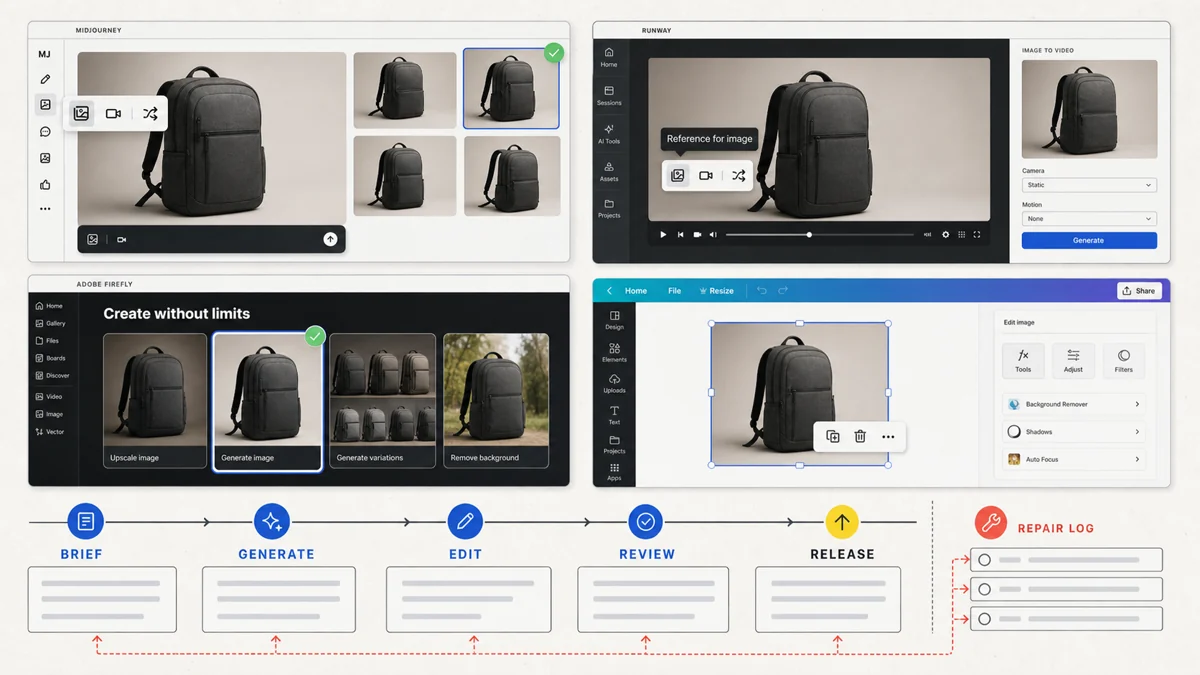
Consider a small outdoor brand launching a repair service. The assignment needs a key image of a worn backpack on a workshop table, a precise change from red stitching to yellow, a six-second motion shot, three social crops, and an editable source for a marketer. The brief prohibits new logos, invented claims, and unapproved people. This is a better comparison than “make a beautiful backpack ad” because the revisions and handoff are visible from the start.2, 12, 7, 5
Midjourney's V8.2 belongs in the image-direction pass: test whether the new model and personalization profile reach the approved visual world with fewer unusable results. Runway belongs in the motion and coordinated-campaign pass, especially where Agent Skills promises to carry work across deliverables. Firefly belongs in the model-and-edit route alongside Creative Cloud, where the team must note which model and credit class it used. Canva belongs at the brand-layout and distribution end, where a non-specialist needs to adapt the approved asset without rebuilding it.2, 12, 7, 9, 6
Those are test positions, not foregone winners. Midjourney may create the strongest key image and lose the exact stitching edit. Runway may coordinate variants and create too much review work between steps. Firefly may offer the most practical repair route for an Adobe team while a partner model changes credit consumption. Canva may deliver channel assets fastest but offer less control over the original scene. The trial should preserve those tradeoffs instead of flattening them into one score.2, 12, 7, 9, 6
The canonical project should live outside any generated chat or taste profile. Keep the brief, licensed references, prompt and settings, selected outputs, edit notes, exported masters, and approvals in a location the team controls. If the chosen route disappears, another operator should still understand what was approved and why.3, 13, 5, 8
Test one brief across complete production routes
Use a real brief with permission to test. Ask for one key visual and one variation that requires a precise edit. If video matters, add a short shot with a named camera movement and continuity requirement. Give every product the same references, dimensions, required text, prohibited elements, and delivery format.2, 12, 7
Do not score the first grid by taste alone. Count generations to the first usable result, time spent repairing it, success of the requested edit, consistency across variants, and the quality of the exported asset. Record plan and credit consumption. Give a second team member the project and see whether they can continue without the original operator's memory.11, 9, 6
| Dimension | Evidence to collect | Failure that should change the decision |
|---|---|---|
| Direction | Brief, references, prompt, selected result | The tool produces attractive work that ignores the subject or constraint |
| Control | Edit history, masks, references, reruns | A small change requires recreating the asset and loses approved details |
| Consistency | Character, product, palette, composition across variants | Campaign assets drift beyond practical repair |
| Handoff | Project structure, editable files, exports, collaborator test | Only the original operator can reproduce or revise the work |
| Cost | Plan, credits, generation count, failed runs, repair time | The apparent low price disappears at production volume |
| Rights and provenance | Terms snapshot, source assets, consent, credentials | The team cannot explain permitted use or asset origin |
Run the test twice. The first pass measures discovery. The second measures repeatability after you have selected a direction. Creative teams earn money from revisions and families of assets, so the second pass often predicts the production cost better.2, 12, 9
Score the repair, not only the reveal
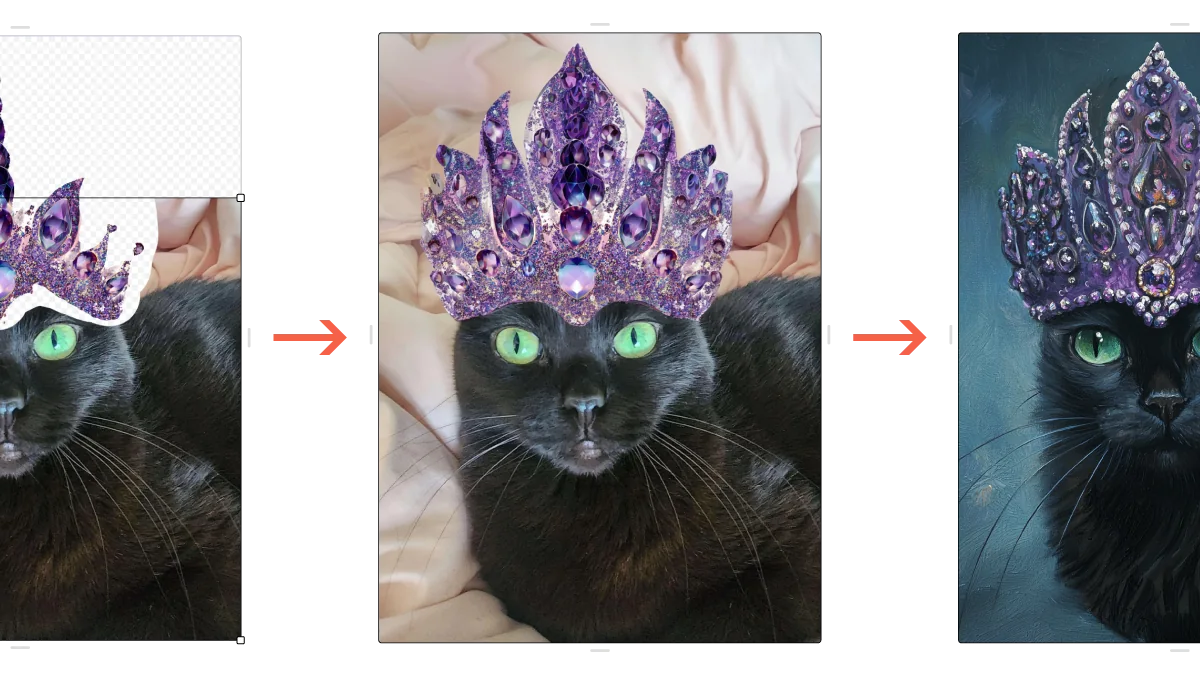
After selecting the backpack scene, change only the stitch color. Then change the background crop without changing the backpack. Add the motion shot while preserving its wear marks. Finally, hand the project to someone who did not write the prompt. Each step tests whether approval attaches to an asset or merely to a lucky generation.2, 12, 7, 5
Record the number of rejected generations, but also name why they failed: subject drift, unreadable product construction, unwanted marks, inconsistent repair details, or an edit that destroyed the chosen lighting. Those categories teach the team which route is expensive. A total of twelve generations tells almost nothing if eleven were cheap explorations; one failed approved edit can be the real schedule risk.9, 11, 2
The final comparison should end in a route recommendation. For example: Midjourney for direction exploration, Firefly and Photoshop for controlled still edits, Runway for the motion pass, Canva for approved channel layouts, with one external project record. A different trial may keep the whole job in Runway or Adobe. The value of the exercise is that the tool boundary follows demonstrated work rather than habit.2, 12, 7, 6
Count model use, video seconds, reruns, and repair
Subscription price has become a weak proxy for production cost. Adobe distinguishes standard and premium generations, and its current credit table assigns different rates to image, audio, and video operations. It also says credits do not roll over month to month. Runway publishes plan allowances, while Midjourney and Canva attach access and usage to their own plans.9, 11, 3, 6
Estimate a deliverable rather than a month of abstract access. Count exploratory generations, selected shots, failed edits, upscales, localization variants, and export work. Add human selection and cleanup. A model that costs more per generation can win if it needs fewer attempts and hands off a cleaner asset.9, 11, 6
Watch agentic routes for multiplication. One request can branch into several formats and languages, each with its own generation and review cost. Test with a small campaign before granting the system a full matrix of markets and channels.12, 9
Review rights and provenance with the creative work
Each service sets its own terms for inputs, outputs, accounts, and acceptable use. Save the terms and plan page reviewed for the project. Record who supplied each reference, whether recognizable people consented, and whether the brief includes brands or protected characters. A paid plan and a download button do not resolve every rights question.3, 5, 8, 13
Adobe documents Content Credentials as information attached to an asset about its origin and editing history. C2PA defines a technical structure for signed provenance claims. That evidence can help recipients inspect how an asset was made. It cannot prove that the image is accurate, that a person consented, or that every source was authorized. A reviewer still decides whether the asset belongs in the campaign.10, 14
Keep provenance through export where the delivery route supports it, and preserve a separate production record where channels strip metadata. Store the source assets, model or feature, date, operator, selected output, edits, terms snapshot, and approval. This record matters most when the final file travels far from the tool that created it.10, 14, 3, 13
Provenance should also survive the composite. If the final campaign image begins in one model, is repaired in another, laid out in Canva, and animated in Runway, the record should name every material step. Do not overwrite the source file with a polished export and call the history complete. The assembled asset has more than one origin.10, 14, 13, 5
The reviewer still needs to inspect the visible claim. Content Credentials can help show process; terms can describe the service contract; neither tells the audience that the pictured backpack repair actually occurred. Label demonstrations and generated scenes when context could make them misleading. Provenance is evidence about production, not a substitute for truthfulness.10, 14, 8, 5
Change the operating workflow, not only the tool list
Midjourney users should rerun a small set of established briefs in V8.2 and compare old and new personalization profiles. Keep the older route available until the team understands whether the new model improves its own work, not Midjourney's showcase examples.2
Runway users should test Agent Skills on one bounded campaign and inspect each intermediate asset. The feature deserves adoption when the team can correct copy, images, video, and localization without losing provenance or spending more time untangling the route than it saves.12, 13
Adobe users should compare the chosen model, credit cost, and downstream editability inside Firefly and Creative Cloud. Canva users should judge whether brand and distribution speed outweigh a specialist generator for the job. Teams using several products should pick a canonical project location and an export standard before adding another model.7, 9, 6
July did not produce one best creative tool. It made the category less about isolated generation and more about who controls the complete production route. Choose the route that reaches an approved, editable, attributable asset with the least hidden repair work, and keep a fallback for the job that pays for the subscription.2, 12, 10, 14