Start with the support route, then price the seats
Zendesk’s lowest public seat is cheaper than Intercom’s standard Essential seat, but those entry plans are not equivalent support bundles. For annual base-seat planning, model only the full agents you can verify, then keep AI resolutions or Fin outcomes, paid channels, add-ons, implementation, tax, negotiation, and migration outside that subtotal. A governed ticket operation may start with Zendesk; an in-product conversational team may start with Intercom; a hybrid team must price the route it will actually operate. These are dated public-price models, not checkout quotes or total-cost guarantees.1, 2
The prices below were visible on United States public pages on 14 August 2026. They are monthly equivalents tied to annual billing where stated. They do not include tax, exchange rates, negotiated terms, region-specific checkout changes, or future plan changes. Reopen the official pages and obtain a written quote before approval.1, 2
The cheapest named plans are not comparable bundles
Zendesk Support Team is an email-and-ticketing entry route. Zendesk Suite Team adds a knowledge base, messaging, live chat, telephony, omnichannel routing, and AI-agent access. Intercom Essential combines Messenger, a shared inbox, ticketing, reports, a public help center, and Fin access. Multiplying the first number shown by headcount would therefore compare different operating jobs rather than equivalent support systems.1, 2
Use the existing Zendesk-versus-Intercom product comparison when the decision is ticket governance versus conversational support. Use this pricing model only after the team has named its channels, full-agent jobs, AI route, data obligations, and migration boundary.1, 2
Official price units and billing cadence
Standard list prices and temporary offers belong in separate fields. Intercom showed Essential at a $29 list price and a $19 new-customer offer while annual billing was selected. The promotional number is not used in the annual base-seat model because eligibility, duration, renewal treatment, and regional checkout terms were not confirmed.2
| Vendor and plan | Public standard price | Billing unit and cadence | Promotion or quote boundary |
|---|---|---|---|
| Zendesk Support Team | $19 per agent/month | Paid yearly; full agent seat | No standard discount assumed |
| Zendesk Suite Team | $55 per agent/month | Paid yearly; full agent seat | No standard discount assumed |
| Zendesk Suite Professional | $115 per agent/month | Paid yearly; full agent seat | No standard discount assumed |
| Zendesk Suite Enterprise + Copilot | Current public price not confirmed | Sales-assisted quote | Excluded from numeric models |
| Intercom Essential | $29 per full seat/month | Billed annually was selected | $19 new-customer offer shown separately; excluded from the standard model |
| Intercom Advanced | $85 per full seat/month | Billed annually was selected | Includes 20 Lite seats, which are not substitutes for full support seats |
| Intercom Expert | $132 per full seat/month | Billed annually was selected | Includes 50 Lite seats, which are not substitutes for full support seats |
Intercom defines a Full seat as paid access for teammates who interact with customers and use core features. Lite seats on Advanced and Expert are for limited internal collaboration; only Full seats can send messages or fully use outbound features. This article therefore never offsets full-agent headcount with free Lite seats.2
Annual base cost for one, five, and twenty full agents
The table is arithmetic, not a quote: monthly public standard price multiplied by twelve months and the stated number of full agents. It intentionally excludes AI usage, paid channels, add-ons, taxes, implementation, migration, minimums, discounts, and negotiation. Plans remain side-by-side reference routes, not equivalent feature bundles.1, 2
| Full agents | Zendesk Support Team | Zendesk Suite Team | Zendesk Suite Professional | Intercom Essential list | Intercom Advanced | Intercom Expert |
|---|---|---|---|---|---|---|
| 1 | $228 | $660 | $1,380 | $348 | $1,020 | $1,584 |
| 5 | $1,140 | $3,300 | $6,900 | $1,740 | $5,100 | $7,920 |
| 20 | $4,560 | $13,200 | $27,600 | $6,960 | $20,400 | $31,680 |
Do not add the observed Intercom Essential promotion to a savings claim. A one-agent promotional subtotal would be $228 for twelve months only if the offer remained eligible for the whole modeled term; that condition was not confirmed, so the figure is not used as a standard annual cost.2

Keep AI, channels, add-ons, and promotions variable
Intercom’s public page prices Fin from $0.99 per outcome. It says an outcome can be counted when the customer confirms resolution, does not ask for more help after Fin responds, or Fin completes a Procedure including a handoff, and it charges once per conversation. Zendesk now groups automated resolutions into tiers introduced on 18 May 2026; the public tier document describes assisted escalation, contained resolution, and verified resolution, but it does not publish one normalized current price that can safely enter this model.2, 3
| Variable | Current public evidence | How to model it |
|---|---|---|
| Intercom Fin AI Agent | From $0.99 per Fin outcome | Multiply only a measured outcome forecast; keep retries, containment, and workflow design assumptions visible |
| Zendesk automated resolutions | Current public price not confirmed | Obtain the account’s resolution-tier allowance, committed usage, and overage quote before adding a number |
| Zendesk Copilot | $50 per agent/month paid yearly | Add only for named agents who need the add-on; do not assume it is included in lower plans |
| Intercom Copilot | $29 per agent/month; limited included conversations are stated | Model named paid agents and confirm current included and overage treatment |
| Intercom Pro add-on | From $99/month | Keep separate from Full seats and Fin outcomes |
| Intercom Proactive Support Plus | $99/month | Keep separate from Full seats and paid channel usage |
| Intercom outbound email, SMS, WhatsApp, and Phone | Pay-as-you-go; rate or region varies | Forecast each channel independently from support email, live chat, and in-app support included in the plans |
| New-customer and startup promotions | Eligibility and duration vary | Record beside the list price; never convert to a standard renewal assumption |
The variables can be larger than the seat subtotal in an AI-heavy or outbound workflow. Require separate owners for full seats, outcomes or resolutions, channel volume, add-ons, and promotional expiry so one favorable headline does not hide a different renewal bill.1, 3, 2
Budget implementation, export, migration, and exit
Zendesk’s account export tools are not enabled by default. Eligible plans can export ticket, user, or organization data to JSON, CSV, or XML; Team plans do not receive those account-export tools, although Zendesk says all plans can use its REST API. Zendesk also states that AI-agent tickets cannot be exported through the described account export.4
Intercom separates conversation content, reporting metadata, contact data, tickets, APIs, and cloud-storage exports. Individual or bounded bulk conversation exports can produce text or PDF, the Conversations API can retrieve content at larger scale, browser CSV exports provide reporting metadata rather than full message content, and contact exports are delivered separately. Intercom also warns that exported conversation data is not directly importable into a new Intercom workspace.5, 6
| Cost or risk | Evidence to collect before contract | Budget treatment |
|---|---|---|
| Implementation | Identity, inboxes, routing, channels, knowledge, roles, automations, reporting, security review | Vendor quote plus named internal hours |
| Historical data | Tickets, conversations, users, companies, attachments, notes, timestamps, custom fields | Export sample, field map, storage, conversion, import, and validation |
| AI configuration | Knowledge sources, procedures, tier or outcome rules, evaluation, audit history | Treat as a separate rebuild and acceptance project |
| Parallel run | Duplicate subscriptions, channel routing, reconciliation, support coverage | Add a bounded overlap with an owner and end date |
| Exit | Final exports, retained copies, API limits, account closure, rollback | Approve before purchase and rehearse before cancellation |
Choose one of three buying routes
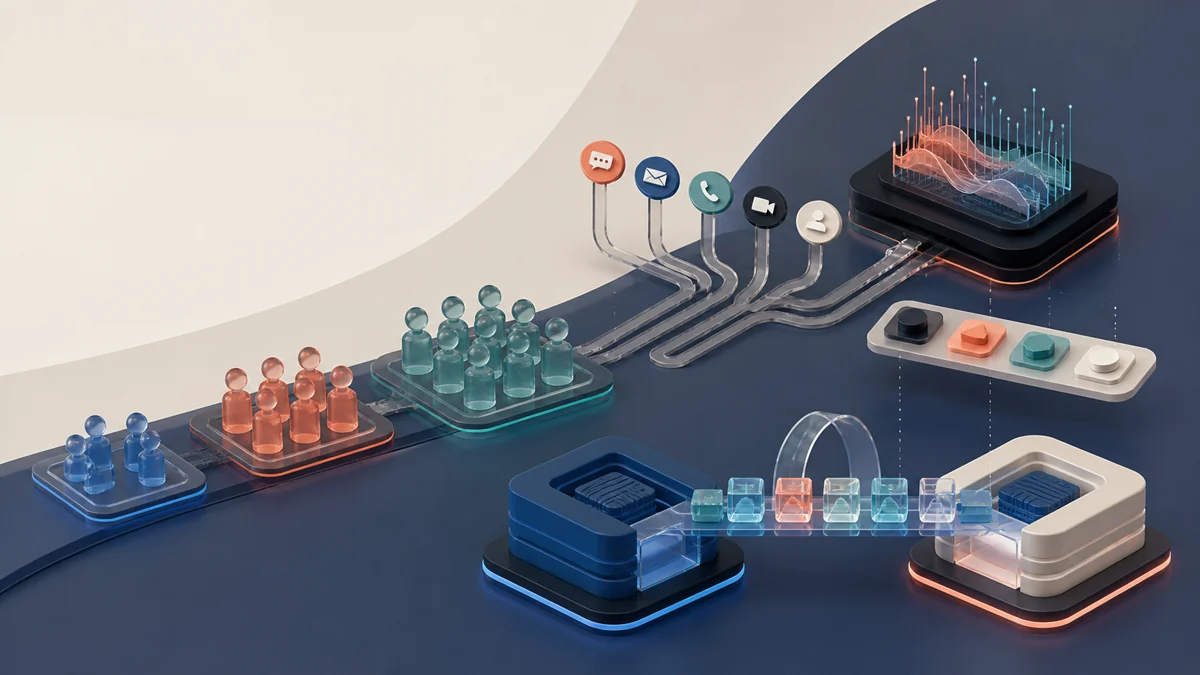
The pricing route should follow the support operating model. A ticket-governance team values queue ownership, routing, controls, reporting, and auditable handoffs. A conversational team values product-context messaging, in-app support, outbound coordination, and Fin usage economics. A hybrid team must decide which system owns the authoritative conversation record and how the other channels or systems hand off into it.1, 2
| Buying route | Start the evaluation with | Cost fields that decide the route |
|---|---|---|
| Governed ticket operation | Zendesk Support or Suite, depending on required channels and controls | Full agents, Suite boundary, Copilot, automated-resolution tier, implementation, export |
| In-product conversation | Intercom Essential, Advanced, or Expert based on collaboration and governance | Full seats, Fin outcomes, channels, add-ons, contact and conversation export |
| Hybrid support | A written system-of-record and channel handoff design | Both seat bases, integration work, duplicate records, AI usage, parallel run, migration and exit |
Do not choose the hybrid route merely because both products have useful features. Keep both only when each owns a distinct recurring job that survives an overlap review and the additional integration, reporting, identity, and exit work has a named budget.1, 2, 4, 5
Method, verification date, and limits
This is an official-evidence procurement model checked on 14 August 2026. It is not an actual TCO, an implementation quote, a negotiated contract, a production support test, or a migration success proof. Tool Atlas did not run the same ticket set, channel mix, AI workload, export, import, or reversible migration in both products.1, 2, 3, 4, 5, 6
| Field | Status in this article | Required next evidence |
|---|---|---|
| Annual standard full-seat arithmetic | Calculated from dated public prices | Current region-specific checkout or written quote |
| Intercom Essential promotion | Observed, excluded from standard total | Eligibility, duration, renewal price, and contract wording |
| Zendesk resolution-tier price | Current public price not confirmed | Account allowance, committed usage, overage, and tier quote |
| AI workload economics | Not tested | Same representative support workload with measured outcomes and escalations |
| Implementation and migration | Not rehearsed | Scoped statement of work, export samples, import mapping, validation, and rollback |
| Complete TCO | Not claimed | Taxes, labor rates, integrations, support, security, legal, discounts, and operating volume |
Every public price, allowance, channel rule, promotion, and export boundary can change. Store the URL, region, visible state, verification date, and written quote with the purchase record rather than copying this model into an evergreen procurement promise.1, 2, 3, 4, 5, 6
Continue to the right decision page
- Use the Zendesk-versus-Intercom comparison for ticket governance versus conversational support, not for another price multiplication.
- Use the Zendesk and Intercom tool profiles to inspect each product’s governed catalog role before procurement.
- Use the broader 2026 software pricing guide to place seats, usage, implementation, migration, and exit in the same renewal ledger.
These next steps are intentionally bidirectional: the product-choice page keeps the support-model decision, while this satellite keeps pricing and cost-by-team-size intent.1, 2